The Kilojoule Economy: How Hyperscalers Became the Energy Sector's Most Prized Counterparties

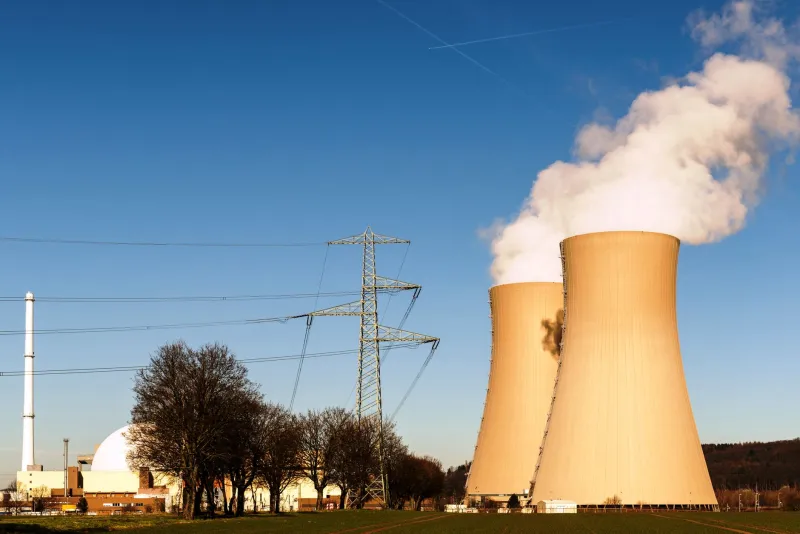
Photo: Taxiarchos228, CC BY 3.0, via Wikimedia Commons
For decades, the most valuable customer a US power producer could sign was another utility or a large industrial manufacturer. That hierarchy has been overturned. The counterparties commanding the richest terms in today's power markets are technology companies building data centers to train and serve artificial intelligence models — and the contracts they are signing bear little resemblance to the renewable offtake deals of the last decade.
Demand That Doesn't Wait
Traditional load growth in the American grid crept along at barely half a percent annually for much of the 2010s. Forecasts from grid operators and consultancies now point to multi-percent growth for the first time in a generation, with data centers responsible for the overwhelming share of new demand. A single AI training campus can draw hundreds of megawatts — the load profile of a mid-sized city compressed into a few hundred acres.
What makes this demand uniquely disruptive is its urgency. Cloud providers face competitive pressure to deploy computing capacity on timelines measured in months, not the five to ten years a new utility-scale plant or transmission line typically requires. That mismatch has produced a scramble for whatever firm capacity exists today.
The Resurrection Trade
The most striking symptom of the shortage is the return of plants once written off. Gas-fired units retired prematurely during the 2010s — casualties of cheap renewables and low gas prices — are being recommissioned or upgraded under long-term contracts underwritten by technology companies. In several regional markets, plant owners have publicly confirmed that hyperscaler-backed agreements made restart economics pencil out where they previously did not.
This is a genuine reversal of the stranded-asset narrative that dominated energy boardrooms for a decade. Assets once destined for demolition are now among the most valuable firm-capacity positions in a portfolio. Investors who held through the write-downs are being rewarded in ways few modeled.
Pricing Power Flows to the Seller
The structure of these deals reflects who holds leverage. Where renewable PPAs once featured declining prices and generous terms for the buyer, data center contracts increasingly include:
- Premium pricing for firm, 24/7 power, often well above wholesale benchmarks
- Contract tenors of 10 to 20 years, far longer than typical corporate offtake
- Take-or-pay provisions that shift volume risk to the buyer
- Speed-to-power premiums, where customers effectively pay for queue position
For utilities in Virginia, Texas, Georgia, and Arizona — the geographies where data center concentration is highest — this represents a rare moment of pricing strength. Regulators, however, are watching closely. Several state commissions have begun scrutinizing whether residential ratepayers are implicitly subsidizing the infrastructure build-out demanded by some of the world's most profitable corporations.
Crowding Out the Traditional Offtaker
The second-order effect deserves attention from energy professionals across the value chain. Every gigawatt of firm capacity committed to a hyperscaler is a gigawatt unavailable to manufacturers, electrification programs, or hydrogen producers who were promised a buyer's market for clean power. Industrial developers in the Southeast have already reported competitive disadvantages in attracting energy-intensive projects as utilities allocate capacity to data center contracts.
There is also a carbon accounting question. Technology companies that built their brands on renewable commitments are now signing deals with gas plants — and in some cases advocating for nuclear restarts — because the physics of AI training demand uninterrupted power. The gap between sustainability marketing and procurement reality is widening, and regulators, investors, and journalists will increasingly probe it.
What Comes Next
Three developments bear watching. First, whether behind-the-meter generation — data centers building their own gas or nuclear capacity — erodes the utility intermediary model entirely. Second, whether state commissions impose ratepayer-protection frameworks that reshape deal economics. Third, whether the current capacity shortage resolves through new build or persists long enough to entrench today's extraordinary pricing.
The kilojoule economy is still being priced. But the direction is clear: in the market for electricity, the customer with the deepest balance sheet and the least patience is setting the terms.