Follow the Money: The Unlikely Coalition Financing America's Nuclear Second Act
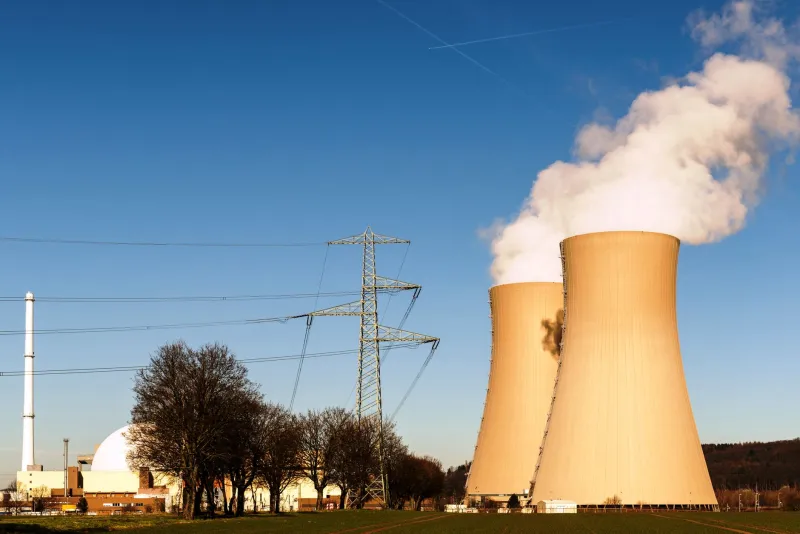
The nuclear restart story is usually told in megawatts. It should be told in balance sheets. Behind each reactor brought back from the brink — whether through full restart, license extension, or uprate — sits an unusual financing coalition that bears little resemblance to how baseload plants were funded in the twentieth century.
The Anatomy of a Restart
Consider the pattern. The most prominent restart of the era — a retired unit brought back online largely to serve a single technology company's power needs — was made possible by a combination of a twenty-year power purchase agreement from the buyer, a federal loan guarantee, and regulatory approval processes accelerated by state officials eager to retain jobs and tax base. Life-extension deals at other plants follow a similar template: a creditworthy corporate offtaker willing to sign long, plus public money absorbing tail risk.
This is not how utilities financed reactors in 1975. Then, a regulated utility issued bonds and ratepayers bore the cost overruns. Today, the parties writing checks are, in rough order:
- Hyperscale technology companies seeking carbon-free firm power for data centers
- The Department of Energy's loan programs office, providing guarantees that crowd in private capital
- State governments, through production tax credits, ratepayer protections, or direct support
- Private equity and infrastructure funds, increasingly comfortable with the steady cash flows of an operating reactor
Why the Old Model Died
Understanding why this patchwork exists requires understanding what broke the original model. New nuclear construction in the West has been defined by cost overruns so severe — see the Vogtle expansion in Georgia, which finished years late and roughly double its initial budget — that conventional project finance fled the sector. No lender will underwrite construction risk at nuclear scale without public backstop.
But operating reactors are a different asset class entirely. Once running, a plant produces predictable, low-marginal-cost power for decades. The financing innovation of the current moment is recognizing that the operating risk is manageable even if the construction risk is not. Restarts and life extensions skip the deadly construction phase entirely — the asset already exists, already holds its license framework, and already has interconnection rights that would take a new project a decade to obtain.
The Buyer of Last Resort Becomes the Buyer of First Resort
The critical enabler, in nearly every deal, has been the same: a technology company with an enormous balance sheet and an existential need for firm, carbon-free electricity. These buyers are not purchasing power so much as underwriting asset revival. Their credit quality — several of these firms carry ratings better than the utilities that once owned the plants — allows financing structures that merchant generators could never access.
Skeptics rightly note the fragility in this arrangement. Corporate procurement strategies can shift; a single large buyer's retreat could strand a revived asset. Regulators in several states have begun asking whether the public supports — loan guarantees, expedited review — are appropriately priced given the private gains flowing to counterparties.
Model or Anomaly?
Whether restart economics generalize depends on three variables. First, the pipeline: only a handful of shutdown units remain technically viable for restart, and most life-extension candidates are already in process. Second, the federal posture: loan program capacity and nuclear production tax credits are finite, and political turnover creates uncertainty. Third, and most important, whether the first wave of restarts performs. If a revived reactor runs cleanly and profitably for five years, the template hardens. A single operational failure would set the sector back a decade.
For energy professionals, the lesson is less about nuclear than about capital formation itself. The deals reshaping the sector are no longer struck between utilities and ratepayers, but between corporate treasurers, federal credit agencies, and infrastructure funds. Whoever learns to navigate that coalition fastest holds the advantage in the next cycle of asset revival — nuclear or otherwise.