Distressed to Decarbonized: How Private Equity Is Betting on the Wreckage of Legacy Energy

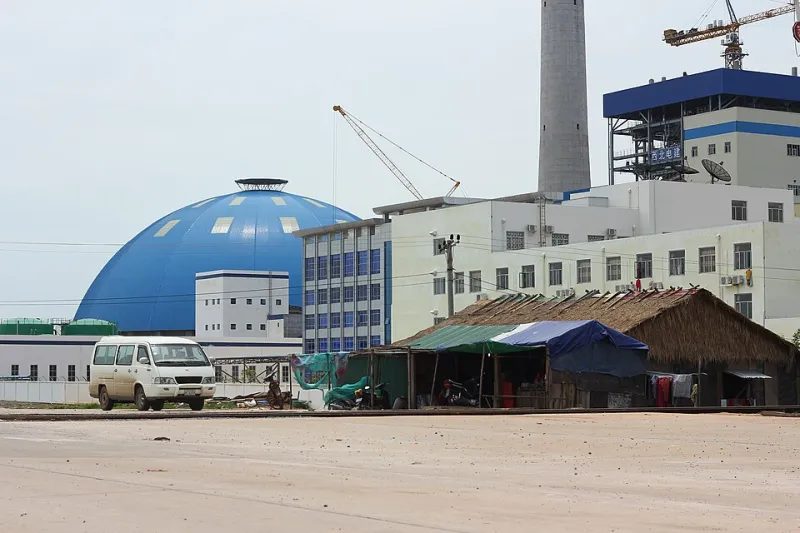
Photo: NedEM, CC BY-SA 3.0, via Wikimedia Commons
For decades, the conventional wisdom in energy finance held that coal plants, aging gas peakers, and underutilized pipeline corridors were assets to be managed into quiet obsolescence — written down gradually, decommissioned responsibly, and ultimately forgotten. That consensus is fracturing. A growing cohort of private equity investors has concluded that the wreckage of the legacy energy economy represents not a liability to be absorbed, but an opportunity to be captured.
The strategy, still nascent but accelerating, involves acquiring distressed or undervalued conventional energy assets at significant discounts and repurposing them — in whole or in part — to serve the infrastructure demands of the clean energy transition. It is a high-stakes proposition that demands sophisticated risk modeling, deep operational expertise, and a tolerance for regulatory uncertainty that most institutional investors prefer to avoid.
The Anatomy of a Distressed Energy Asset
Not all distressed energy assets are created equal, and private equity firms have become increasingly discriminating about which categories merit acquisition. The most attractive targets share a common profile: physical infrastructure that retains residual value independent of its original fuel source, located in regions where grid constraints are acute and interconnection rights are scarce.
Retired or retiring coal plants represent perhaps the most discussed category. Many of these facilities sit on large parcels of land with existing transmission interconnections — a feature that can take years and hundreds of millions of dollars to secure in today's congested queue environment. When a PE firm acquires such a site, it is often purchasing the interconnection rights as much as the physical plant itself. The boilers and turbines may be worthless; the substation and the grid access it provides may be extraordinarily valuable.
Similarly, stranded midstream infrastructure — pipelines built to serve production regions that have since declined — is attracting interest from investors who see potential in converting these corridors to hydrogen transport or carbon dioxide sequestration. The physical right-of-way, secured through years of easement negotiations, represents a durable asset even when the original commodity flow has dried up.
The Financial Mechanics: Buying Low, Converting Carefully
The investment thesis in this space hinges on a fundamental pricing dislocation. Utilities and integrated energy majors, under pressure from regulators, shareholders, and credit rating agencies, are motivated to divest fossil fuel holdings — often at prices that reflect the reputational and regulatory risk of continued ownership rather than the underlying physical value of the asset. Private equity, operating with longer time horizons and less sensitivity to public perception, can step into that gap.
One frequently cited example involves former coal generation sites in the Midwest, where several PE-backed platforms have acquired retired plants and repositioned them as battery storage facilities or solar-plus-storage developments. The interconnection assets inherited from the coal plant allow these projects to reach commercial operation years ahead of greenfield alternatives, compressing the development timeline and materially improving internal rates of return.
The financial structure of these deals typically involves multiple layers. Acquisition financing is often kept lean, reflecting the genuine uncertainty around conversion costs and regulatory approval timelines. Equity is deployed in tranches, with subsequent capital committed only as specific milestones — environmental remediation clearance, interconnection confirmation, offtake agreement execution — are achieved. This staged approach allows PE sponsors to limit downside exposure while preserving optionality.
Retirement Versus Retrofit: The Central Strategic Decision
For every acquired asset, PE investors face a foundational question: is this facility a candidate for conversion, or is full decommissioning the more value-accretive path? The answer is rarely obvious and frequently contentious within investment committees.
Retrofit candidates must clear several bars simultaneously. The structural integrity of existing civil works — foundations, cooling infrastructure, electrical systems — must be sufficient to support new equipment without prohibitive remediation costs. Environmental liabilities, including coal ash impoundments and soil contamination, must be quantifiable and manageable. And the local regulatory environment must be navigable within a timeframe that preserves the economics of the deal.
Where these conditions are not met, disciplined PE operators are increasingly choosing full retirement and site remediation, then monetizing the land and interconnection rights through sale or ground lease to clean energy developers. This approach sacrifices some upside but dramatically reduces execution risk — a trade-off that more conservative fund mandates tend to favor.
The calculus shifts further when federal incentives enter the equation. Provisions within recent federal energy legislation have created meaningful tax credit opportunities for projects that repurpose energy communities — defined in part by the presence of recently retired fossil fuel infrastructure. For PE investors who structure acquisitions correctly, these credits can substantially improve project economics and, in some cases, make the difference between a viable and nonviable conversion.
Winners, Losers, and the Communities Caught Between
The rise of PE-driven asset repurposing has produced a distinct set of beneficiaries. Utilities divesting legacy assets gain balance sheet relief and regulatory goodwill. PE sponsors with the operational sophistication to execute complex conversions generate attractive risk-adjusted returns. Clean energy developers who acquire fully entitled, interconnection-ready sites from PE platforms pay a premium but avoid years of development friction.
The picture is more complicated for the communities that host these facilities. In regions where coal or gas employment has already declined, the prospect of a new clean energy facility — even one employing a fraction of the original workforce — is often welcomed. Local tax revenues stabilize, and the site avoids the extended limbo of decommissioned-but-unremediated status that has blighted some communities for decades.
However, outcomes are not uniformly positive. Environmental justice advocates have raised legitimate concerns about the pace and adequacy of remediation efforts when PE firms prioritize speed to conversion over thoroughness. There are also documented cases where acquisition has been followed by prolonged inactivity — assets acquired speculatively and then warehoused while sponsors await more favorable market conditions, leaving communities in extended uncertainty.
A Market Still Finding Its Shape
The private equity pivot toward distressed energy assets remains a market in formation. Capital flows are growing, but the universe of sophisticated operators with genuine expertise in both energy infrastructure and clean energy development remains limited. Deal volume is constrained by the finite supply of assets that meet the physical, regulatory, and financial criteria required for viable conversion.
What is clear is that this strategy has introduced a new class of participant into the energy transition — one whose motivations are explicitly financial rather than ideological, and whose discipline around capital deployment may ultimately accelerate the repurposing of stranded infrastructure more effectively than policy mandates alone. For energy professionals tracking where capital is moving and why, the private equity playbook on legacy assets warrants close attention.