Planning Beyond the Incentive Window: How Energy Developers Are Preparing for Federal Tax Credit Sunset
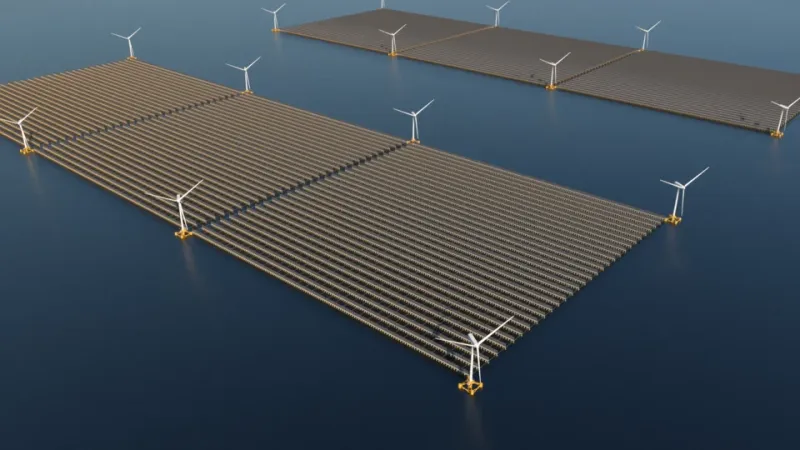
Photo: Wikideas1, CC0, via Wikimedia Commons
For much of the past decade, federal tax incentives have served as the financial backbone of America's renewable energy expansion. The Production Tax Credit (PTC) and Investment Tax Credit (ITC), significantly extended and restructured under the Inflation Reduction Act of 2022, have enabled developers to underwrite projects that would otherwise struggle to pencil out in competitive power markets. But the clock is running. With phase-down schedules embedded in current legislation pointing toward material reductions beginning in the early 2030s, a growing number of energy executives are confronting an uncomfortable question: what does the business model look like when the subsidy floor disappears?
The answer, for those taking the question seriously, involves a fundamental reassessment of capital allocation, financial modeling assumptions, and long-term supply chain architecture.
Understanding the Timeline and Its Implications
The Inflation Reduction Act extended and restructured clean energy tax credits with provisions tied to domestic content requirements, prevailing wage standards, and energy community designations. However, the legislation also embedded phase-out mechanisms linked to greenhouse gas emissions thresholds in the electricity sector. Once those thresholds are met — or by 2032 under certain interpretive frameworks — credit values begin to step down materially.
For developers with project pipelines extending into the mid-2030s, this creates a bifurcated planning environment. Projects commissioned before the phase-out threshold may capture full credit value; those delayed by permitting, interconnection backlogs, or supply chain disruptions may not. The difference in levelized cost of energy between a project that qualifies for full credits and one that does not can range from $15 to $40 per megawatt-hour depending on technology type and financing structure — a gap that, in many markets, determines whether a project is commercially viable at all.
Financial Modeling in an Uncertain Policy Environment
Responsible capital planning in this environment requires scenario modeling that explicitly incorporates policy discontinuity. Firms with sophisticated project finance teams are running parallel financial models — one assuming full credit availability, one assuming partial phase-down, and one assuming full expiration — and stress-testing internal rate of return assumptions across each scenario.
The goal is not necessarily to predict the precise policy outcome, but to identify which projects remain financially defensible across multiple outcomes and which are entirely dependent on subsidy continuity to achieve target returns. Projects falling into the latter category are increasingly being scrutinized for timeline acceleration, contract restructuring, or outright deferral.
Some developers are also incorporating tax credit transferability provisions — another IRA innovation — into their hedging strategies. By pre-selling tax credits to third-party buyers under multi-year transfer agreements, firms can effectively lock in a portion of their credit value before phase-out uncertainty intensifies, converting a contingent future benefit into a more certain near-term cash flow.
Supply Chain Positioning as a Competitive Hedge
Beyond financial modeling, the tax credit sunset is reshaping how developers and manufacturers think about supply chain investment. Domestic content bonuses embedded in current credit structures have already accelerated investment in US-based solar module manufacturing, wind component production, and battery assembly. For companies that have made those capital commitments, the post-subsidy calculus looks different than for those still relying primarily on imported equipment.
Firms that establish domestic supply relationships now — even at marginally higher near-term costs — may find themselves with a structural cost advantage once international competitors lose the incentive to invest in US-compliant manufacturing. Conversely, developers who deferred domestic sourcing decisions in favor of lower short-term procurement costs may face supply constraints precisely when demand for domestically qualified equipment peaks ahead of the expiration window.
This dynamic is already influencing procurement strategy. Several major independent power producers have moved toward longer-term equipment supply agreements with domestic manufacturers, accepting modest price premiums in exchange for supply certainty and credit qualification assurance through the 2020s.
Project Pipeline Prioritization and the Race to Commission
Perhaps the most visible strategic response to the expiration timeline is the acceleration of project commissioning schedules. Developers with large pipelines are making active triage decisions — identifying which projects can realistically reach commercial operation before credit phase-down begins and allocating development resources accordingly.
This prioritization logic is intensifying competition for interconnection queue positions, transmission capacity, and construction labor — all of which are already constrained. The resulting pressure creates a paradox: the urgency to commission projects before the subsidy window closes may itself contribute to the bottlenecks that prevent timely commissioning.
Some industry observers have noted that this dynamic could produce a pronounced boom-bust cycle, with a surge of project completions in the 2028 to 2031 period followed by a sharp contraction as the credit phase-down takes effect and the pipeline of economically viable projects thins. For investors and lenders, this cycle presents both opportunity and risk, depending on where their exposure is concentrated.
The Case for Subsidy-Independent Business Models
A more forward-looking cohort of energy companies is using the expiration timeline not merely as a planning constraint but as a strategic forcing function — an opportunity to accelerate the transition toward business models that do not depend on federal incentives to generate competitive returns.
This approach involves several converging strategies. First, it requires a relentless focus on cost reduction across the project development lifecycle — from land acquisition and permitting to engineering, procurement, and construction. Companies that can drive their unsubsidized levelized costs below prevailing market clearing prices will be structurally competitive regardless of the policy environment.
Second, it involves cultivating long-term power purchase agreement relationships with creditworthy offtakers — particularly large commercial and industrial buyers — who are themselves under pressure to demonstrate clean energy procurement for sustainability and regulatory compliance reasons. These relationships provide revenue visibility that reduces dependence on merchant power price assumptions and makes project economics more resilient to credit phase-outs.
Third, some developers are investing in technology diversification, adding storage, demand response, and grid services capabilities to their portfolios. These revenue streams are largely independent of generation tax credits and can meaningfully improve overall project economics in markets where ancillary services are compensated.
Decision-Maker Implications
For energy executives and capital allocators, the 2032 horizon demands a level of strategic clarity that quarterly earnings cycles rarely encourage. The firms that will navigate the post-incentive landscape most effectively are those that treat the expiration not as a distant risk to be managed later, but as a present-day design constraint that should be shaping investment decisions now.
That means stress-testing project economics against a range of policy scenarios, building supply chain relationships that extend beyond the subsidy window, and investing in the operational capabilities that drive cost competitiveness independent of federal support. It also means being willing to defer or abandon projects that are only viable with full credit availability — a discipline that is difficult to maintain in an environment where pipeline growth is often treated as a proxy for corporate health.
The subsidy era has been instrumental in scaling American renewable energy to its current position. The companies that thrive beyond it will be those that used the incentive window not merely to grow, but to build the structural foundations for long-term competitiveness.