The Regulatory Maze: Why Cross-Border Renewable Projects Are Losing Years and Billions to Permitting Dysfunction
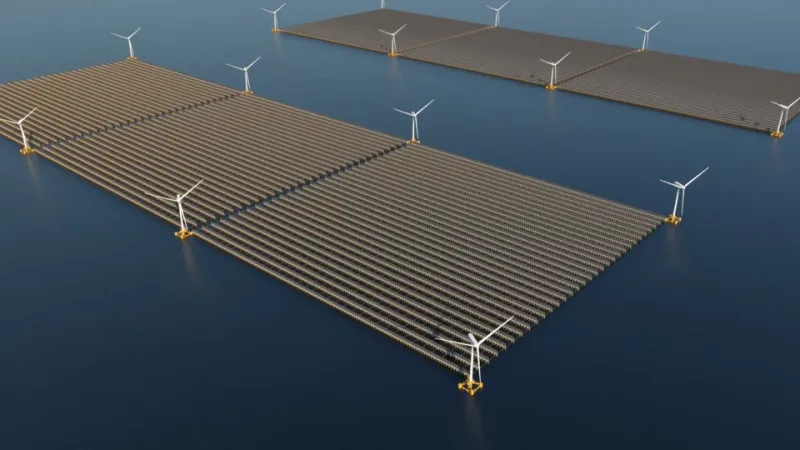
Photo: Wikideas1, CC0, via Wikimedia Commons
America's appetite for large-scale renewable energy is not in question. Utilities are signing long-term power purchase agreements at record pace, institutional capital continues to flow into the sector, and federal policy frameworks have created meaningful incentive structures for wind and solar deployment. Yet on the ground, developers are confronting a reality that financial models and policy briefs rarely capture with adequate precision: the permitting process itself has become a structural liability.
The problem is not simply that permitting takes time. It is that the time required is unpredictable, inconsistent, and highly dependent on which combination of state and local jurisdictions a project happens to traverse. For multi-state renewable projects—an increasingly common configuration as developers pursue optimal resource zones that rarely align with political boundaries—that inconsistency compounds into delays measured not in weeks but in years.
A Patchwork of Timelines and Standards
The United States lacks a unified permitting framework for utility-scale renewable energy. While federal agencies such as the Bureau of Land Management and the Army Corps of Engineers play roles in certain project approvals, the majority of permitting authority resides at the state and local level. That decentralization produces a landscape of extraordinary variation.
Consider the contrast between two neighboring states. One may operate a consolidated siting board that issues a single permit covering environmental, land use, and construction approvals within eighteen months. Its neighbor may require sequential approvals from multiple independent agencies, each with its own review calendar and evidentiary standards, stretching the same process to four years or longer. A transmission line or wind project that crosses both states must satisfy both regimes—sequentially, not simultaneously—effectively stacking timelines rather than running them in parallel.
Environmental review standards present a similar challenge. Some states have adopted streamlined equivalents to the federal National Environmental Policy Act process, allowing concurrent federal and state reviews. Others require independent state environmental impact assessments that do not accept federal findings, forcing developers to commission duplicative studies and re-engage the same community stakeholders multiple times. The redundancy is costly in both direct expenditure and calendar time.
Case Study: The Multi-State Wind Corridor
The experience of large wind development corridors stretching across the central plains illustrates the problem in concrete terms. Projects designed to move power from high-resource areas in states such as Wyoming, Kansas, or Oklahoma to load centers in the Midwest or Southeast must secure right-of-way and siting approvals in each jurisdiction traversed. In several documented instances, a project that completed permitting in its originating state encountered a two-to-three-year delay upon crossing a state line, not because of substantive environmental objections but because the receiving state's review process had no mechanism to recognize or incorporate the work already completed.
Developers report that the carrying cost of capital during these extended timelines is among the most damaging elements of the delay. A utility-scale wind project with a capital requirement of $500 million, financed with a combination of equity and tax equity, accumulates meaningful financing costs during each additional month of pre-construction delay. Industry estimates suggest that a two-year permitting delay on a project of that scale can reduce investor returns by two to four percentage points—a difference that, in a competitive power market, can render a project unbankable.
Interconnection Policy as an Additional Variable
Permitting delays do not operate in isolation. They interact with interconnection queues and policies that vary by regional transmission organization and by state utility commission, adding further layers of uncertainty to project timelines. A developer who secures a state construction permit may still face a multi-year wait for a grid interconnection study, and the standards governing that study—including assumptions about network upgrades and cost allocation—differ materially across regional boundaries.
This intersection of permitting and interconnection dysfunction is particularly acute for projects that span the territory of multiple transmission operators. Coordinating between, for example, the Midcontinent Independent System Operator and the Southwest Power Pool requires navigating distinct procedural rules, different cost-sharing methodologies, and separate queue positions that do not transfer or synchronize. The result is that a project can be fully permitted under state law and still remain years away from a viable grid connection.
The Economic Arithmetic of Misalignment
Quantifying the aggregate economic impact of regulatory fragmentation requires some estimation, but the directional conclusion is not in dispute. Lawrence Berkeley National Laboratory and various industry groups have documented that the average time from project inception to commercial operation for utility-scale solar and wind in the United States has lengthened materially over the past decade, even as technology costs have declined. A significant portion of that lengthening is attributable to permitting and interconnection delays rather than construction complexity.
When carrying costs, extended development overhead, and the opportunity cost of deferred energy production are aggregated across the project pipeline, the figure is substantial. Some analyses have placed the economy-wide cost of permitting-related delays in the renewable sector at several billion dollars annually, a figure that ultimately flows through to ratepayers, utility balance sheets, and investor returns.
For institutional investors evaluating renewable energy allocations, this uncertainty is a pricing problem. Risk-adjusted return requirements for projects with opaque regulatory timelines are higher than for those with predictable approval pathways, which means that capital is either more expensive or, in some cases, redirected to jurisdictions with more reliable processes. States that have invested in permitting efficiency are, in effect, competing for capital against those that have not—a dynamic with long-term consequences for regional energy transition trajectories.
Pathways Toward Greater Coherence
Several approaches have been proposed—and in some cases implemented—to address regulatory fragmentation. Interstate compacts governing transmission siting, modeled on existing agreements in sectors such as transportation and water management, offer one avenue for harmonizing standards without requiring federal preemption. A small number of states have entered into memoranda of understanding to accept each other's environmental review findings, reducing duplicative analysis for projects that cross shared borders.
At the federal level, the Fiscal Responsibility Act of 2023 included provisions intended to accelerate environmental review timelines for major infrastructure projects, and the Federal Energy Regulatory Commission has taken steps to reform interconnection queue procedures. Whether these measures will prove sufficient to materially reduce delays for the most complex multi-state projects remains to be demonstrated.
What is clear is that the current framework imposes real and measurable costs on a sector that the United States has identified as central to its energy and economic future. For energy professionals evaluating project pipelines, capital deployment strategies, or policy exposure, regulatory geography is no longer a secondary consideration. It is, increasingly, a primary determinant of whether a project gets built—and when.
The energy transition will not be delayed by a shortage of sunlight or wind. The more pressing constraint, as the data increasingly suggest, is the institutional infrastructure through which projects must pass before a single turbine turns or a single panel generates power. Addressing that constraint is, at its core, an investment decision—and one that the industry and its regulators have not yet made with sufficient urgency.