Procurement Under Pressure: How Equipment Shortages Are Forcing a Rethink of Energy Capital Strategy
When the Equipment Doesn't Arrive, the Project Doesn't Happen
For decades, capital planning in the US energy sector followed a relatively predictable sequence: secure financing, obtain permits, order equipment, build. That sequence has broken down. Across the country, utility executives and project developers are confronting a new and uncomfortable reality — the availability of physical components is now as consequential to a project's timeline as its financing or regulatory approvals.
Lead times for large power transformers, once measured in weeks, now routinely extend to two or three years. Procurement windows for solar photovoltaic modules, battery storage systems, and the rare earth materials that underpin wind turbine generators have grown unpredictable. The result is a fundamental shift in how energy companies must approach investment decisions, one that demands procurement strategy be elevated from an operational afterthought to a core element of capital planning.
The Anatomy of a Supply Chain Under Strain
The pressures bearing down on energy equipment supply chains are not the product of a single cause. They reflect the convergence of several structural forces that have been building for years and were dramatically accelerated by the pandemic-era disruptions of the early 2020s.
Geographic concentration of manufacturing is perhaps the most significant underlying vulnerability. A substantial share of the world's solar panel manufacturing capacity is concentrated in China, as is production of the processed rare earth materials essential to permanent magnets used in wind turbines and electric motors. For US energy developers, this concentration translates directly into exposure — to trade policy shifts, to diplomatic friction, and to the kind of export restrictions that have periodically rippled through commodity markets in recent years.
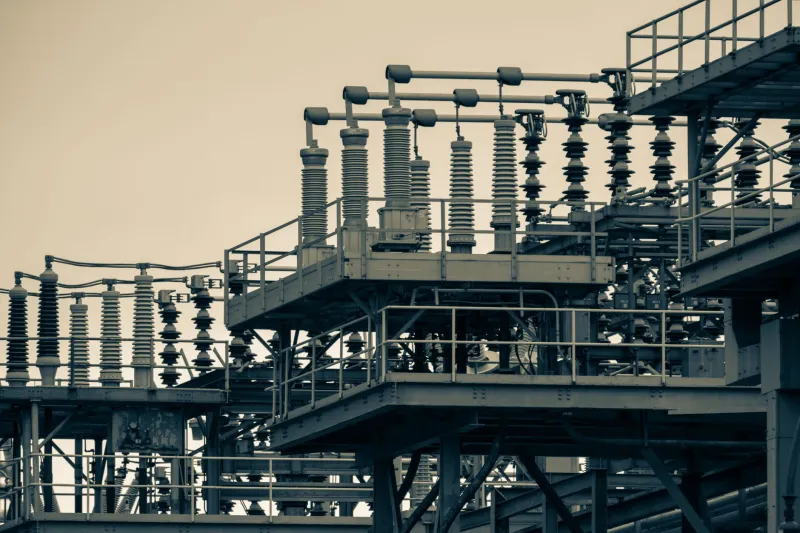
The transformer market tells a different but equally instructive story. The US has limited domestic manufacturing capacity for large power transformers, and the specialized nature of these components — many are custom-engineered for specific grid applications — means that demand surges cannot be met quickly. With grid modernization investment accelerating nationwide and extreme weather events damaging existing infrastructure at an elevated rate, utilities are competing for a constrained supply of equipment that is genuinely difficult to substitute or expedite.
Battery storage components present yet another dimension of the problem. Lithium, cobalt, nickel, and manganese are sourced from a geographically diverse but politically complex set of countries. Processing capacity for battery-grade materials remains heavily concentrated in Asia. As the US pushes aggressively toward grid-scale storage deployment — driven by both state mandates and federal incentives — developers are encountering the hard limits of a supply base that was not built to accommodate the pace of energy transition now being demanded of it.
Capital Planning in the Age of Long Lead Times
The practical consequences of these constraints are visible in how US energy companies are restructuring their procurement and capital allocation processes.
One of the most significant shifts involves the timing of equipment commitments. Developers who previously ordered major components after securing project financing are now placing orders — and in some cases making substantial deposits — well before financial close. This inversion of the traditional project development sequence carries real financial implications. Capital is being deployed earlier, and with less certainty about the regulatory and financing conditions that will ultimately govern a project. Risk profiles have changed accordingly.
Utilities are responding to transformer shortages by building strategic inventory buffers — maintaining stocks of critical equipment that would once have been considered unnecessarily expensive to hold. What was previously dismissed as inefficient working capital is now being reframed as supply chain insurance. Several large investor-owned utilities have publicly acknowledged that their capital expenditure plans now include explicit provisions for strategic equipment reserves, a practice that would have seemed anomalous to infrastructure investors just a decade ago.
Long-term supply agreements are also becoming a more prominent feature of the landscape. Utilities and large independent power producers are negotiating multi-year contracts with equipment manufacturers, sometimes including volume commitments or co-investment arrangements designed to secure priority access to production capacity. These agreements introduce their own complexities — they reduce flexibility and create balance sheet obligations — but they are increasingly viewed as a necessary cost of supply chain predictability.
The Domestic Manufacturing Equation
The Inflation Reduction Act of 2022 introduced a set of incentives explicitly designed to stimulate domestic manufacturing of clean energy components, including solar modules, wind turbines, batteries, and the materials that feed into them. The early results have been encouraging in some respects — announcements of new US manufacturing facilities have multiplied, and investment in domestic production capacity has accelerated.
However, the gap between announced capacity and operational capacity remains wide, and the timeline for closing that gap is measured in years, not months. For energy companies making capital allocation decisions today, the promise of a more robust domestic supply base is a medium-term prospect rather than an immediate solution. In the near term, procurement teams must continue to navigate a constrained global market while incorporating realistic assumptions about when and to what degree domestic alternatives will become available at competitive cost and sufficient scale.
The domestic content requirements embedded in IRA incentives add a further layer of complexity. Projects that seek to maximize tax credit value must demonstrate compliance with sourcing requirements that are, in some cases, difficult to meet given current supply chain realities. Navigating this tension between incentive optimization and procurement practicality has become a significant technical and financial challenge for project development teams.
Building Resilience Into the Investment Framework
What separates the companies managing these pressures effectively from those struggling to maintain project schedules is largely a matter of institutional approach. The organizations navigating supply chain volatility most successfully have made several organizational and strategic adjustments worth examining.
First, they have elevated supply chain expertise within the capital planning function. Procurement professionals with deep knowledge of global equipment markets now sit alongside financial analysts and engineers in the project development process, contributing to feasibility assessments and risk models from the earliest stages of project evaluation.
Second, they have adopted more dynamic scenario planning practices. Rather than building capital plans around a single set of equipment cost and availability assumptions, leading organizations are stress-testing investment cases against a range of supply chain scenarios — including extended lead times, price escalation, and potential sourcing disruptions — and designing projects with sufficient flexibility to absorb those variations.
Third, they are investing in supplier relationship management as a strategic capability. The energy companies with the best access to constrained equipment are often those that have cultivated long-standing relationships with manufacturers, paid attention to supplier financial health, and positioned themselves as preferred customers through consistent and professional procurement practices.
The Broader Investment Implication
For investors and financial stakeholders evaluating US energy sector opportunities, supply chain risk has emerged as a material consideration that warrants explicit attention in due diligence and portfolio management processes. Project delays driven by equipment unavailability have real consequences for return profiles and financing structures. The companies that have invested in supply chain resilience — and can demonstrate that investment through transparent procurement practices and robust risk disclosure — represent a meaningfully different risk proposition than those that have not.
The energy transition is, at its core, a massive infrastructure build-out. That build-out requires an enormous volume of physical equipment, sourced from a global supply chain that was not designed with this scale of demand in mind. Acknowledging that reality, and building it into every layer of capital strategy, is no longer optional. It is a prerequisite for credible energy investment planning in the United States today.