Writing Down the Past: How Energy Firms Are Confronting the Financial Fallout of Fossil Fuel Portfolios
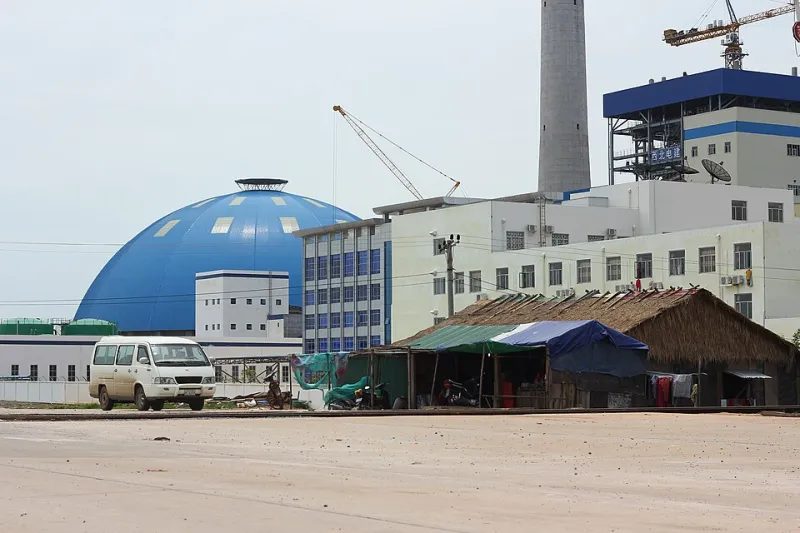
Photo: Dmitry Makeev, CC BY-SA 4.0, via Wikimedia Commons
Across the American energy sector, executives and board members are confronting an uncomfortable truth: a growing share of coal and natural gas assets may never deliver the returns once projected. As transition dynamics accelerate faster than most financial models anticipated, the pressure to reassess, restructure, and reallocate is no longer a distant strategic concern—it is an immediate balance sheet reality.
The term "stranded asset" has circulated in energy finance circles for years, often treated as a theoretical risk horizon rather than an operational emergency. That framing is changing. Utility-scale coal plants that were underwritten with 30- or 40-year operating assumptions are being retired a decade or more ahead of schedule. Midstream gas infrastructure commissioned during the shale boom now faces demand projections that no longer align with original investment theses. For corporate decision-makers, the question is no longer whether impairment is coming—it is how to manage the timing, the magnitude, and the strategic pivot that must follow.
The Accelerating Gap Between Projection and Reality
When energy companies initially capitalized large fossil fuel assets, their financial models rested on assumptions about fuel prices, regulatory stability, and load growth that have since shifted materially. The rapid cost decline of utility-scale solar and wind, combined with increasingly aggressive state-level renewable portfolio standards and federal clean energy incentives, has compressed the competitive window for legacy generation in ways that were not fully priced into most long-range forecasts.
Coal's trajectory is the most visible. The US Energy Information Administration has documented a steep and largely irreversible decline in coal's share of the national generation mix, with retirements outpacing new capacity additions by a wide margin. For companies still carrying coal plants on their books at original or near-original valuations, the financial exposure is substantial. Impairment charges—where the carrying value of an asset is written down to reflect its diminished recoverable value—have become a recurring line item in earnings disclosures for several major utilities and independent power producers.
Natural gas presents a more nuanced picture. While gas has served as a transitional fuel in many markets, particularly as intermittent renewable generation has scaled, the long-term outlook for gas-fired generation is increasingly contested. Peaker plants, once considered essential reliability infrastructure, are facing displacement from battery storage systems as storage costs decline. Baseload gas capacity in markets with high renewable penetration is experiencing compressed capacity factors, reducing revenue certainty and extending payback timelines.
Portfolio Reassessment: From Accounting Exercise to Strategic Imperative
For energy companies navigating this environment, portfolio reassessment has evolved from a periodic accounting exercise into a continuous strategic function. The analytical frameworks being applied are becoming more sophisticated, integrating scenario modeling that accounts for carbon pricing trajectories, grid evolution, and policy risk alongside traditional discounted cash flow analysis.
Several publicly traded utilities have begun publishing explicit asset-by-asset retirement schedules that go beyond regulatory requirements, signaling to capital markets that management is actively managing stranded asset exposure rather than waiting for external pressure to force action. This transparency carries its own strategic logic: investors and ratings agencies have made clear that undisclosed or poorly managed transition risk represents a material financial concern, and companies that get ahead of the disclosure curve tend to retain better access to capital markets.
Private equity-backed independent power producers face a different set of pressures. With tighter return timelines and more concentrated exposure to specific asset classes, some PE-owned platforms are pursuing accelerated divestitures of coal and older gas assets, often at significant discounts to book value. The buyers in these transactions are frequently specialized firms that see value in operating assets through their remaining useful life while managing decommissioning liabilities—a market segment that has grown meaningfully over the past several years.
Capital Reallocation: Where the Money Is Moving
The other side of the stranded asset equation is capital reallocation. For every dollar written off a legacy fossil fuel asset, there is a corresponding decision about where that capital—and the organizational capacity that supported it—should be redeployed.
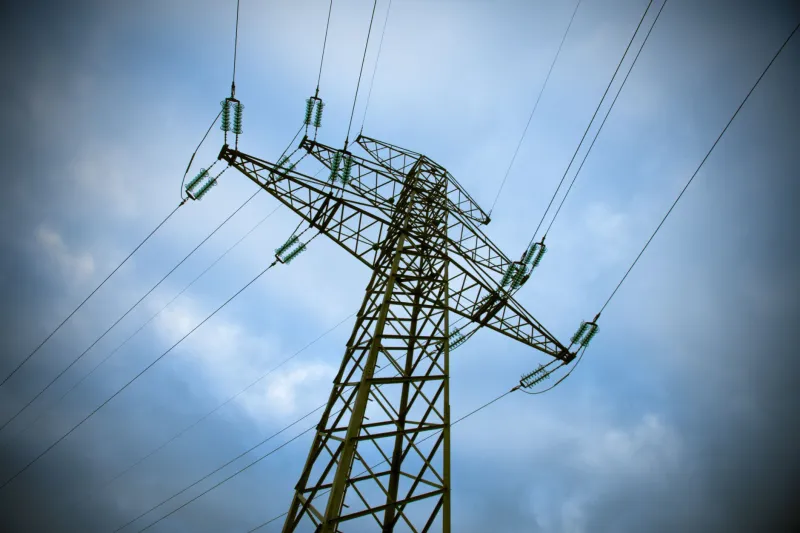
Transmission and distribution infrastructure has emerged as one of the primary destinations for redirected investment. Grid modernization requirements, driven by both reliability concerns and the integration demands of distributed renewable generation, represent a multi-decade capital deployment opportunity that carries a regulated return structure many utilities find attractive relative to the merchant risk of generation assets. The FERC-regulated transmission sector, in particular, has seen significant inflows from companies pivoting away from generation.
Renewable generation development is the other obvious destination, though the competitive landscape for utility-scale solar and wind has intensified considerably. Companies with strong development pipelines, interconnection queue positions, and offtake relationships are better positioned to redeploy capital productively. Those without that infrastructure face the challenge of building or acquiring it in a market where quality development assets command premium valuations.
Energy storage, both utility-scale and behind-the-meter, represents a third avenue. As battery technology matures and storage becomes a more central component of grid operations, companies with the technical and financial capacity to develop storage assets are finding opportunities that align with their existing operational competencies in dispatch management and grid services.
The Regulatory and Legal Dimension
Capital reallocation decisions do not occur in a regulatory vacuum. For rate-regulated utilities, the recovery of stranded costs through customer rates is a contested and jurisdiction-specific process. State public utility commissions have taken varying approaches to cost recovery for early plant retirements, with some allowing full recovery through securitization mechanisms and others resisting ratepayer allocation of what regulators characterize as imprudent investment decisions.
The legal and regulatory dimension adds complexity to the timing of write-down decisions. Companies must balance the financial logic of recognizing impairment promptly against the risk that early disclosure of an asset's diminished value weakens their position in subsequent rate cases. Legal counsel and regulatory affairs teams are increasingly involved in financial planning conversations that were once the exclusive domain of treasury and accounting functions.
Implications for Investors and Decision-Makers
For investors evaluating energy sector equities or debt, the stranded asset question demands a more granular analytical approach than broad sector classifications typically support. Two utilities with similar generation portfolios can carry materially different levels of stranded asset risk depending on their state regulatory environment, the vintage and efficiency of their fossil fuel fleet, and the quality of their transition planning.
For corporate decision-makers inside energy firms, the imperative is to build financial planning processes that treat transition risk as a first-order variable rather than a tail scenario. That means stress-testing asset valuations against accelerated retirement timelines, developing clear criteria for write-down triggers, and maintaining a capital allocation framework flexible enough to redirect investment as market conditions evolve.
The stranded asset reckoning is not a single event. It is a structural repricing that will play out over years across thousands of individual assets, balance sheets, and investment portfolios. Companies that engage with it systematically, rather than reactively, will be better positioned to preserve capital, maintain investor confidence, and fund the infrastructure that the next chapter of American energy demands.