The Operator Shortage: Inside the Growing Crisis of Grid Management Talent Across US Utilities
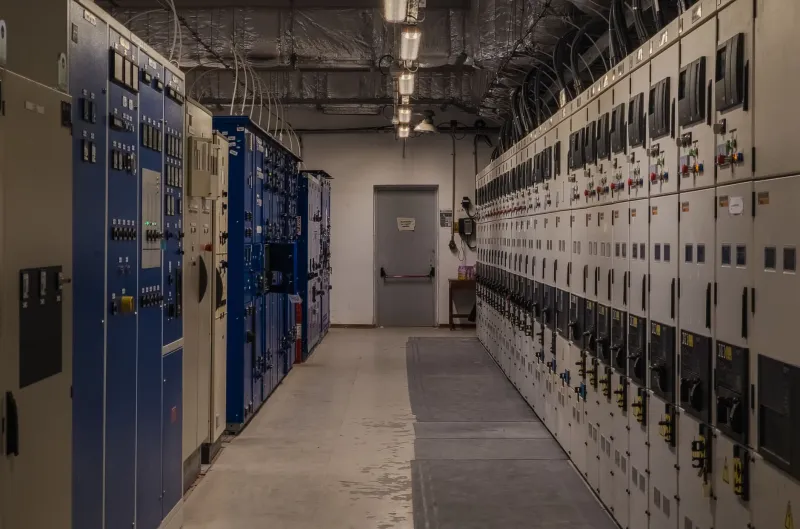
The control rooms that manage America's electric grid are among the most operationally demanding environments in any industry. SCADA operators monitoring real-time system conditions, transmission engineers modeling contingency scenarios, and energy management specialists balancing generation dispatch across interconnected regions—these professionals perform work that directly determines whether the lights stay on for millions of households and businesses. They are also, increasingly, in critically short supply.
Across US utilities and independent system operators, a convergence of demographic pressures, compensation constraints, and rapidly escalating technical complexity has produced what many in the industry are now characterizing as a genuine workforce emergency. The shortage is not hypothetical or projected—it is unfolding now, in hiring pipelines that cannot fill open positions, in overtime rates that are straining operational budgets, and in the quiet but consequential reality that some facilities are running with staffing levels that leave little margin for error.
The Retirement Wave That Was Predicted and Still Wasn't Prepared For
The energy industry has known for years that a significant portion of its most experienced workforce would reach retirement age in the 2020s. The warnings were published in workforce studies, cited in utility integrated resource plans, and discussed at industry conferences throughout the previous decade. Despite this foreknowledge, the scale and pace of the departure has caught many organizations underprepared.
The problem is particularly acute in operational roles that require years of accumulated experience before an individual can function independently in high-stakes environments. A SCADA operator managing a complex transmission system, or a grid reliability engineer capable of analyzing N-2 contingencies under real-time pressure, cannot be developed in months. The knowledge embedded in experienced grid professionals—pattern recognition built through years of system observation, familiarity with the idiosyncratic behavior of specific infrastructure, and the judgment to make rapid decisions during abnormal conditions—is not easily codified or transferred.
When a significant share of that institutional knowledge walks out the door in a compressed timeframe, the gap is not simply a vacancy to be filled. It represents a reduction in organizational capability that takes years to rebuild, regardless of how aggressively a utility recruits.
Wage Pressure and the Retention Problem
Retention of mid-career grid professionals has become an equally pressing challenge. Utilities, many of which operate under rate-regulated compensation structures that limit their flexibility to respond rapidly to market wage movements, are finding themselves outbid by technology companies, consulting firms, and—increasingly—by other utilities and ISOs engaged in their own aggressive recruiting.
The expansion of NERC-regulated reliability functions, the buildout of energy management systems at new market entrants, and the growth of distributed energy resource management platforms have all created demand for grid expertise that extends well beyond the traditional utility employer base. A transmission engineer with experience in real-time operations and market systems now has a broader set of potential employers than at any previous point in the industry's history—and many of those employers are not constrained by the compensation frameworks that govern rate-regulated utilities.
The result is a self-reinforcing dynamic. As experienced professionals leave for higher-paying roles in adjacent sectors, the remaining staff absorbs greater workload, which accelerates burnout and attrition among the very people utilities can least afford to lose. Some organizations have responded with targeted retention bonuses and market-adjusted compensation reviews, but these measures are often reactive rather than structural, and they do not address the underlying pipeline problem.
Training Partnerships and Workforce Development Initiatives
Faced with a hiring market they cannot win through compensation alone, a growing number of utilities and grid operators are investing in structured training and workforce development programs designed to build operational talent from earlier career stages.
Community college partnerships have emerged as one of the more promising approaches. Utilities in states including Texas, the Carolinas, and the Pacific Northwest have developed curriculum partnerships with regional two-year institutions, creating associate degree programs in power systems technology and energy operations that feed directly into utility training pipelines. These programs offer an alternative pathway for individuals who might not pursue a four-year engineering degree but who possess the technical aptitude and attention to detail that grid operations demands.
Military veteran transition programs represent another area of active investment. Veterans with backgrounds in electrical systems, communications infrastructure, and operational command environments often possess skill sets that translate well to utility control room environments. Several utilities have formalized relationships with military transition assistance programs, offering structured onboarding tracks that recognize prior technical training and accelerate credentialing timelines.
ISOs including PJM Interconnection and the Midcontinent Independent System Operator have developed internal training academies that provide structured progression frameworks for entry-level hires. These programs combine classroom instruction in power systems fundamentals with supervised on-the-job training in live operational environments, and they have shown measurable results in reducing time-to-competency for new grid operations staff.
Technology as a Partial Mitigation—and a New Demand Signal
Advanced energy management systems, AI-assisted situational awareness tools, and automated alarm management platforms are increasingly cited as partial solutions to the staffing challenge. The logic is straightforward: if technology can reduce the cognitive burden on individual operators and surface critical information more efficiently, existing staff can manage greater system complexity without proportional headcount increases.
There is genuine merit to this argument, and utilities are investing accordingly. However, technology deployment introduces its own workforce demands. Implementing and maintaining advanced SCADA platforms, integrating distributed energy resource management systems, and operating AI-assisted grid analytics tools all require personnel with skills that are, if anything, even scarcer than traditional grid operations expertise. The workforce challenge does not disappear with technology adoption—it evolves.
For energy sector professionals and organizational leaders monitoring this issue, the central takeaway is that the grid management talent shortage is a systemic constraint on operational reliability, not merely a human resources inconvenience. Addressing it requires long-horizon investment in training infrastructure, compensation frameworks that reflect actual market conditions, and a genuine organizational commitment to building the next generation of grid professionals before the current generation is no longer available to guide them.