The Forecast Gap: Why Utility Demand Projections Keep Missing the Mark
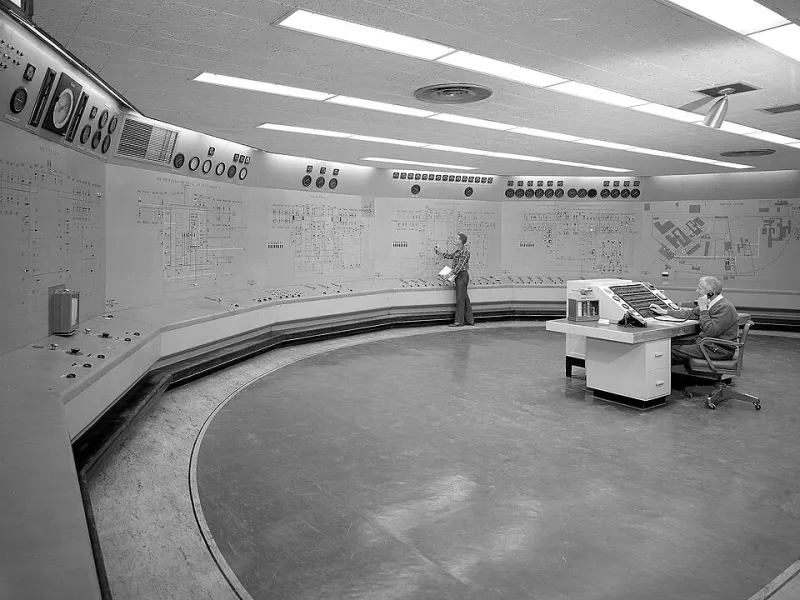
Photo: NASA Glenn Research Center, Public domain, via Wikimedia Commons
Utility load forecasting used to be a quiet discipline built on smooth economic trends and predictable weather. In 2026, it is a high-stakes exercise in uncertainty. Data center announcements, electrification mandates, and industrial reshoring are reshaping demand at a pace that traditional models were not designed to capture. Yet utilities are still committing to generation, transmission, and distribution projects with useful lives measured in decades.
The result is a forecast gap with real financial consequences. When projections are too high, ratepayers fund capacity that may not be needed. When they are too low, utilities scramble for supply and reliability margins tighten. Neither outcome is cheap.
The New Load Curve
After years of flat demand, many regions are seeing load growth return. The difference is the shape and concentration of that growth. A single data center campus can add hundreds of megawatts, often on a timeline that is hard to predict. Electric vehicles, heat pumps, and industrial projects add smaller but widespread increments. The result is a load curve that is less smooth, more weather-sensitive, and more dependent on a handful of large customers.
Forecasters typically combine top-down economic models with bottom-up pipelines of proposed projects. Both approaches have weaknesses. Top-down models can miss the timing of a single large load. Bottom-up pipelines can overstate conversion rates, because announced projects frequently stall, shrink, or move to another state.
The Cost of Being Wrong in Both Directions
Overbuilding is the more familiar risk. If a utility builds transmission or generation for load that never arrives, the cost is spread across remaining customers. Stranded costs become a political issue, especially when rate base grows faster than sales. Regulators may disallow recovery, forcing shareholders to absorb part of the loss.
Underbuilding is less visible until it becomes urgent. A utility that misses a large load may need emergency procurement, short-term capacity purchases, or temporary generation. In recent capacity auctions, tight supply conditions have produced price signals that reflect the cost of inadequate planning. Ratepayers ultimately pay through capacity charges, spot market exposure, or reliability-must-run contracts.
Why Forecasts Miss
Data center load is often opaque. Hyperscalers negotiate directly with utilities and state officials, sometimes behind confidentiality agreements. A project may be announced, delayed, or reconfigured several times before construction. Behind-the-meter generation and on-site storage can further change the utility's net load forecast.
Electrification is also uneven. Policy targets do not guarantee consumer adoption. Industrial reshoring is lumpy, driven by federal incentives, supply-chain decisions, and local site readiness. Weather adds another layer of uncertainty, particularly as extreme heat and cold push peak demand higher.
Organizational incentives can distort forecasts as well. A planner who overforecasts may be rewarded for reliability; a planner who underforecasts may be criticized after the fact. Regulatory lag can encourage utilities to lock in capital plans before new load data is fully understood.
Scenario Planning in Practice
A growing number of utilities are moving toward scenario-based planning. Instead of a single base case, they model high, low, and delayed load trajectories. Some are using probabilistic forecasting and third-party reviews of large-load pipelines. Others are staging capital approval so that projects are released in tranches as demand materializes.
State commissions are also asking harder questions. Integrated resource plans increasingly require sensitivity analysis for data center load, electrification, and industrial growth. Large-load tariffs with interruptible service and bring-your-own-generation options are becoming more common. These tools do not eliminate forecast error, but they can reduce the cost of being wrong.
What Ratepayers Should Demand
Forecast transparency matters. Regulators should ask utilities to separate large-load categories, disclose conversion assumptions, and update projections more frequently. Cost allocation is equally important. If a utility builds for a single large customer, that customer should bear more of the risk.
The forecast gap will not close completely. The economy is too dynamic, and large loads are too concentrated. But utilities can manage the gap with better scenarios, staged investment, and clearer risk sharing. Ratepayers should not be asked to fund a future that never arrives, nor to absorb the cost of a future that arrives unprepared.