Before the Next Pilot: A Diligence Checklist for Grid-Enhancing Technologies
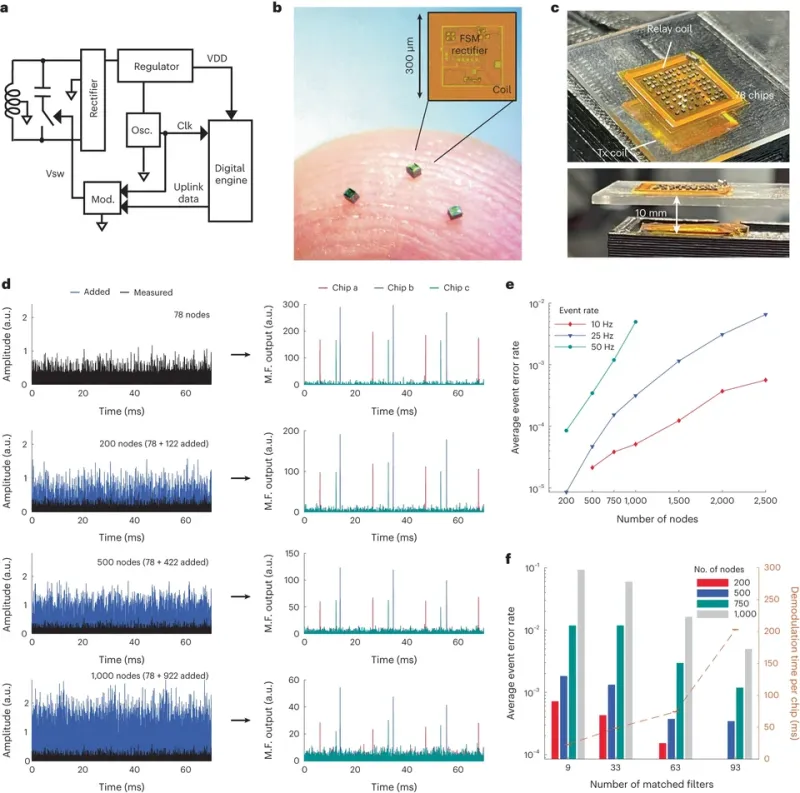
Photo: Authors of the study: Jihun Lee, Ah-Hyoung Lee, Vincent Leung, Farah Laiwalla, Miguel Angel Lopez-Gordo, Lawrence Larson & Arto Nurmikko, CC BY 4.0, via Wikimedia Commons
Grid-enhancing technologies are having a moment. Dynamic line ratings, advanced conductors, and topology optimization all promise to squeeze more capacity from existing transmission and distribution assets. For utilities facing interconnection queues, load growth, and limited construction budgets, the appeal is obvious. In 2026, the market is crowded with pilots, and the claims are not always comparable.
The problem is not that the technologies are unproven. The problem is that value depends on location, operating conditions, regulatory treatment, and the utility's own data quality. Before committing capital, executives should ask five questions.
1. What Problem Are You Actually Solving?
Grid-enhancing technologies are not a single solution. Dynamic line ratings can increase transfer capability by using real-time weather and conductor data. Advanced conductors can reduce losses or carry more current. Topology optimization can reroute power flows through switching. Each addresses a different constraint.
Start with a specific congestion point, thermal limit, or voltage issue. Ask whether the technology solves that problem or simply shifts it elsewhere. A dynamic line rating may relieve a thermal constraint but do nothing for voltage stability. An advanced conductor may increase capacity but require new structures or longer outages. The diligence question is not whether the technology works in general, but whether it works on this line, at this substation, under these operating conditions.
2. What Is the Verified Capacity Gain, and Under What Conditions?
Vendor claims often cite peak capacity increases under favorable conditions. The utility needs to know the expected gain across the full year, not just the best hour. Ask for field data from comparable installations, not laboratory results. Review the assumptions behind the model: wind speed, ambient temperature, solar radiation, conductor age, and sensor placement.
Dynamic line ratings are particularly sensitive to data quality. A single weather station may not represent conditions along a hundred-mile line. Ask how many sensors are required, how often they report, and what happens when data is missing. For advanced conductors, ask about sag, tension, and thermal expansion under real load. For topology optimization, ask how often the system can be reconfigured and what constraints limit switching.
3. How Will the Regulator Treat the Investment?
Regulatory treatment can make or break the business case. Some grid-enhancing technologies qualify as traditional capital investments; others may be treated as operating expenses or software costs. Recovery timing matters. A technology that reduces congestion may also reduce a utility's congestion revenue, creating a conflict that regulators will notice.
Ask whether the utility needs pre-approval, whether the investment fits an existing rate mechanism, and how the benefits will be measured. Some state commissions are opening dedicated proceedings on grid-enhancing technologies. Others have no framework at all. The diligence question is not just whether the technology is cost-effective, but whether the utility can recover the cost in a reasonable period.
4. What Does the Full Lifecycle Cost Look Like?
Vendors often quote hardware and installation costs. The full cost includes sensors, communications, software licenses, integration with energy management systems, training, maintenance, and replacement. Dynamic line rating systems require ongoing weather data services. Advanced conductors may require new fittings, clamps, or structural upgrades. Topology optimization may require new switching devices or protection coordination.
Ask for a five-year and ten-year cost estimate. Include the cost of outages and construction labor. Compare the lifecycle cost with the alternative: new construction, reconductoring, or demand-side resources. The cheapest pilot is not necessarily the cheapest solution.
5. What Is the Exit Plan If the Technology Underperforms?
Every pilot should have an exit ramp. Ask what happens if the capacity gain is lower than expected, if the vendor fails, or if the regulatory treatment changes. Is the technology interoperable with existing systems? Can the utility remove it without stranding other assets? Who owns the data, and can it be transferred?
A successful pilot should produce a decision, not just a report. Define success metrics in advance: available transfer capability, congestion hours avoided, outage frequency, and cost per megawatt of additional capacity. Set a timeline for scale-up or termination. The utilities that get the most from grid-enhancing technologies are not the ones with the most pilots. They are the ones with the discipline to stop, scale, or redesign based on evidence.
The Bottom Line
Grid-enhancing technologies can be a valuable part of the capacity toolkit, but they are not a shortcut around engineering and regulatory diligence. The right questions are specific, quantitative, and tied to the utility's own grid. Executives who ask them before the next pilot will be better positioned to separate real grid value from vendor hype.