The Uninsurable Map: When Carrier Retreat Becomes a Capital Allocation Problem
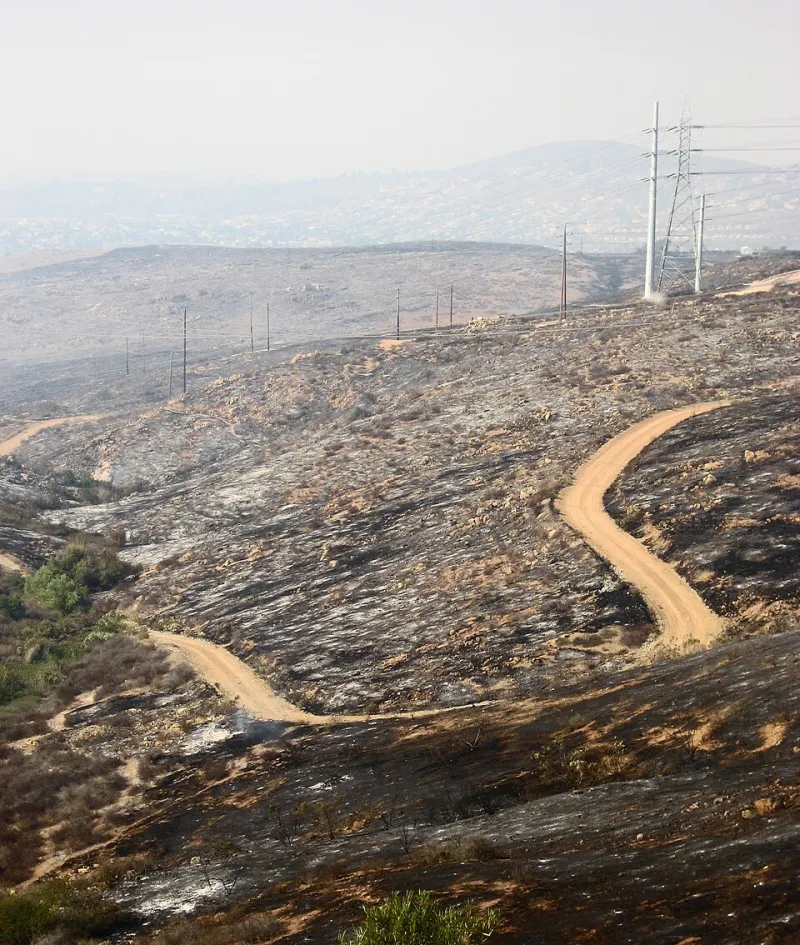
Photo: Erin Pettigrew, CC BY 2.0, via Wikimedia Commons
Insurance used to arrive late in the capital stack, after siting, permitting, and offtake had been settled. As of November 2026, that sequence no longer holds. In parts of the United States exposed to wildfire, convective storm, hail, and hurricane risk, carriers are declining to write new policies, tightening terms on renewals, or exiting entire states and subregions. The result is not simply a higher line item. It is a new gatekeeper in US energy investment.
From Line Item to Gatekeeper
For a generation of developers, insurance was priced as a modest carrying cost. Lenders required it, utilities purchased it, and sponsors treated it as a routine closing condition. That assumption is now unsafe. When a carrier will not write the policy, the project does not get built. Construction lenders will not fund without adequate builder's risk coverage. Tax equity investors will not commit without satisfactory operational coverage. Offtakers may have contractual rights to review insurance adequacy. A project can clear every permitting hurdle and still fail at the insurance desk.
The problem is especially acute for assets that depend on a single peril. A wildfire-exposed transmission corridor, a solar farm in a hail-prone county, or a gas-fired plant on a hurricane coast may face a market in which the few remaining carriers demand deductibles, sublimits, or exclusions that fundamentally alter the risk allocation. In some cases, the policy is available only at a price that erases the project's expected return.
How Carrier Retreat Reprices a Project
Carrier withdrawal affects valuation through several channels at once. The direct channel is premium expense. The indirect channel is more consequential: insurance availability shapes debt sizing, reserve requirements, and the discount rate lenders apply to cash flows. A project in a region that the market has quietly written off may be financeable only with larger equity cushions, shorter tenors, or costly collateral support.
There is also a contractual channel. Power purchase agreements and asset sale agreements often contain insurance covenants that were drafted in a softer market. If the required coverage is no longer commercially available, the sponsor may be forced to seek waivers, post additional security, or accept a lower sale price. Buyers are beginning to price this risk explicitly in diligence, asking not only what the current policy costs but whether a comparable policy can be renewed at all.
Parametric and Captive Structures Gain Ground
Two responses are gaining traction. The first is parametric insurance, which pays out when a defined physical trigger is met, such as wind speed, rainfall, or a wildfire perimeter crossing a specified boundary. Parametric policies can close faster and reduce disputes over loss adjustment, but they introduce basis risk: the trigger may not align with actual damage. For energy assets, that mismatch must be modeled carefully, not treated as a substitute for traditional indemnity coverage.
The second is captive insurance. Larger sponsors and utilities are examining captives to retain selected risks, access reinsurance markets, and gain more control over claims and coverage terms. Captives are not a loophole. They require capital, actuarial discipline, regulatory approvals, and a clear understanding of correlated risk. A captive that concentrates wildfire exposure across a portfolio may simply relocate the problem to the sponsor's balance sheet.
What Diligence Must Demand Before Capital Moves
Boards and investment committees should treat insurability as a diligence item on par with interconnection and offtake. That means requesting complete loss runs, not just summaries. It means reviewing carrier concentration and the financial strength of each counterparty. It means stress-testing renewal scenarios at higher deductibles and lower sublimits. It means reading the insurance covenants in every material contract and identifying which ones become impossible to satisfy if a carrier leaves the state.
Developers should also test whether the project can be economically relocated, redesigned, or phased. A site that is uninsurable today may become insurable after vegetation management, fire-hardening, or a change in equipment specifications. Utilities, meanwhile, should examine whether self-insurance or a captive can absorb risk without shifting undue cost to ratepayers.
The broader point is that the US energy map now has an insurance overlay. Regions that appear attractive on resource quality and offtake may be unattractive on insurability. Capital allocators who ignore that overlay are not taking measured risk. They are relying on a market that may no longer be there at renewal.