The Interconnection Premium: Why Aging Wind Sites Are Outpacing Greenfield Projects
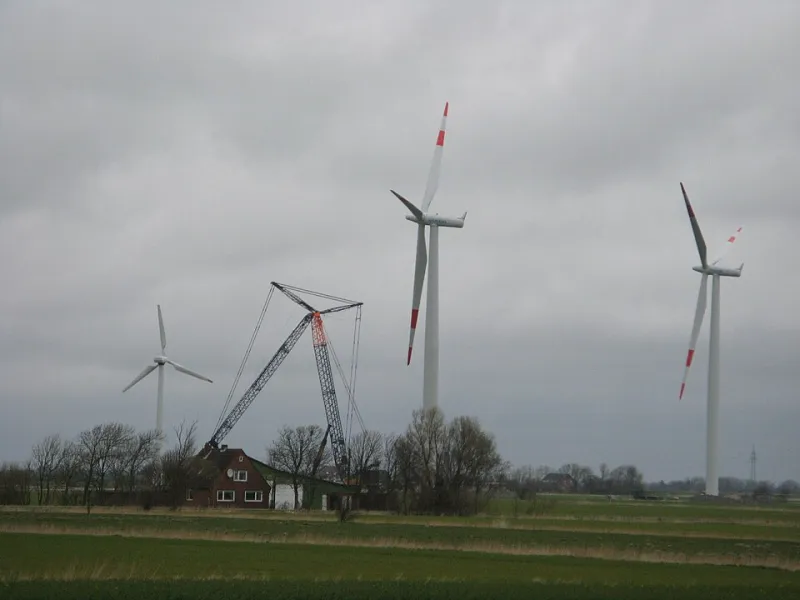
Photo: No machine-readable author provided. Southgeist assumed (based on copyright claims)., CC BY-SA 3.0, via Wikimedia Commons
The US wind fleet is entering middle age. Projects built in the early 2000s have largely exhausted their original ten-year production tax credit windows, yet many continue to generate power with years of mechanical life remaining. As of November 2026, owners of these assets face a familiar but increasingly urgent question: repower, retire, or sell. The answer is being shaped less by turbine technology than by an asset that does not appear on the nameplate: interconnection rights.
The Asset Behind the Turbines
A wind farm is not only a collection of towers and blades. It is a permitted site, a power purchase agreement or merchant revenue stream, a operations team, and a position in an interconnection queue that has already cleared studies and assigned network upgrades. In many regions, that queue position is now the scarcest part of the value chain. New projects wait years for study results, face escalating upgrade costs, and compete for limited transmission capacity.
For an aging wind site, the existing interconnection rights can be preserved or expanded through repowering. That advantage is difficult to overstate. A greenfield project may have better wind resource and newer technology, but it also carries development risk, permitting risk, and the risk that the queue reforms again before it reaches commercial operation. An existing site has already absorbed much of that uncertainty.
Repower or Retire: An Illustrative Framework
Consider a hypothetical 100-megawatt wind farm with a capacity factor in the low 30s and turbines nearing the end of their useful life. A repowering plan might replace nacelles, blades, and controls while retaining towers and foundations, lifting the capacity factor into the low 40s and increasing output without expanding the interconnection footprint. The capital cost per megawatt is typically below that of a new build, but it is not trivial, and the schedule depends on equipment availability and crane capacity.
Retirement, by contrast, eliminates operating costs but forfeits revenue and may trigger decommissioning obligations. Selling the site to a specialist buyer transfers those decisions to a counterparty that may place a premium on the interconnection position. The right answer depends on the remaining life of the power purchase agreement, the local capacity market, the condition of the balance of plant, and the owner's tax position. The math is site-specific, but the framework is consistent: compare the net present value of repowering against the net present value of retirement and sale, including the option value of the interconnection rights.
Tax Credits, Equipment, and Timing
Tax policy adds a layer of complexity. Repowering can affect eligibility for production or investment tax credits, and the rules are not uniform across all fact patterns. Owners should obtain tax counsel early, particularly where partial repowering or changes in nameplate capacity are involved. Transferable credits, where available, can improve monetization for sponsors that lack sufficient tax appetite, but they do not eliminate the need to document qualification carefully.
Equipment lead times remain a practical constraint. Turbine manufacturers have improved delivery schedules since the supply chain disruptions of the early 2020s, but large components and specialized cranes are still booked well in advance. A repowering project that misses a construction window may lose a year of production and, in some markets, a year of qualifying credit generation. Owners should secure long-lead items before finalizing the capital budget.
Financing the Second Act
Lenders and tax equity investors are becoming more comfortable with repowering, but they apply heightened scrutiny to execution risk. The question is not only whether the new equipment will perform, but whether the existing foundations, towers, and collection system can support it. A thorough diligence process includes structural assessments, interconnection re-study requirements, and a clear plan for managing outages during construction.
The strategic implication is straightforward. In a market where queue positions are precious, an aging wind site is not a legacy liability by default. It may be a platform for lower-cost capacity, a hedge against interconnection delays, and a candidate for hybridization with storage. Owners who treat repowering as a routine maintenance decision may miss the larger point: the site's most valuable feature may be the right to connect.