The Price of Inaction: Quantifying the True Cost of Aging Utility Infrastructure Across America
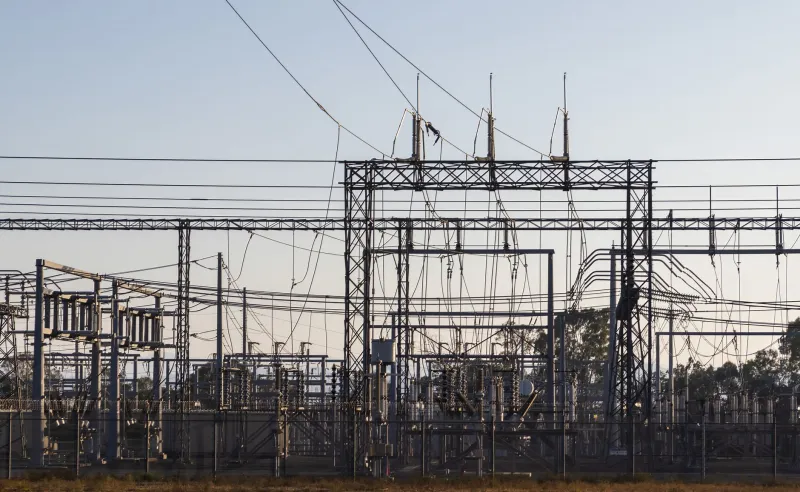
For decades, American utilities operated under a straightforward philosophy: if the lights stay on, the system is working. That logic sustained infrastructure investment strategies well into the early 2000s, but it has since become one of the most expensive assumptions in the energy sector. Today, a significant portion of the United States' transmission and distribution network was built during the Eisenhower and Johnson administrations — infrastructure that was never designed to accommodate distributed energy resources, smart grid communication protocols, or the dramatic load fluctuations driven by electrification trends.
The consequences are no longer theoretical. They appear in quarterly earnings reports, rate case filings, and post-incident analyses filed with state utility commissions from California to Florida.
Defining Technical Debt in the Utility Context
The software industry coined the term "technical debt" to describe the long-term cost of choosing expedient solutions over sound architecture. The energy sector has its own version of this problem, and it compounds with interest.
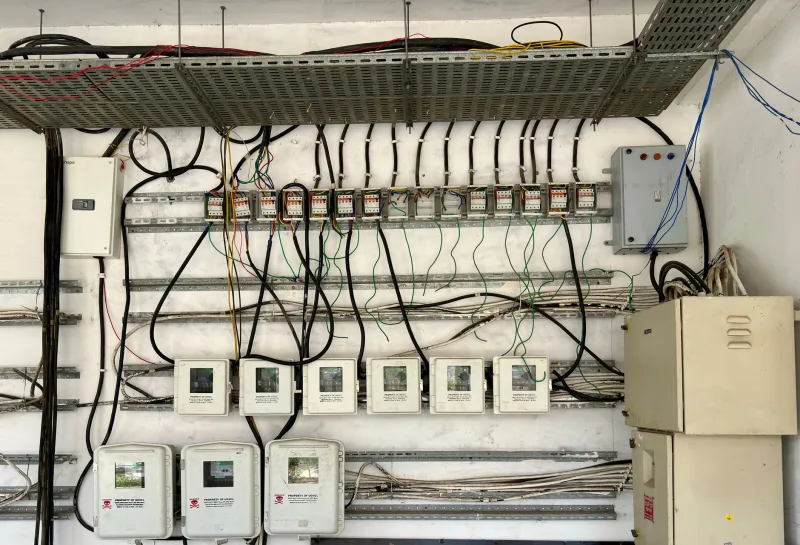
When a utility defers replacement of a 50-year-old transformer or continues operating supervisory control and data acquisition (SCADA) systems that predate modern cybersecurity standards, it is not simply postponing a capital expenditure. It is accumulating a growing liability — one that manifests as elevated maintenance costs, reduced operational flexibility, increased outage frequency, and regulatory exposure.
According to the American Society of Civil Engineers' 2021 Infrastructure Report Card, the average age of large power transformers in the United States exceeds 40 years, with many critical assets operating well beyond their intended design life. Replacing a single large power transformer can cost between $3 million and $10 million and require lead times of 12 to 24 months. When one fails unexpectedly — as occurred during the 2003 Northeast blackout and multiple subsequent regional events — the cascading operational and reputational costs dwarf the price of proactive replacement.
Case Study: The Midwest Distribution Overhaul
One instructive example involves a major Midwestern investor-owned utility that operated a distribution network where nearly 60 percent of its underground cable infrastructure dated to the 1970s. Over a five-year period preceding its modernization initiative, the utility documented a 34 percent increase in cable-related outage incidents, along with a corresponding surge in crew dispatch costs and customer interruption penalties embedded in its performance-based regulatory framework.
After commissioning an independent asset health assessment, utility leadership presented regulators with a lifecycle cost analysis comparing continued deferred maintenance against a structured replacement program. The analysis demonstrated that proactive replacement over a 10-year horizon would reduce total cost of ownership by approximately 28 percent compared to reactive maintenance, once unplanned outage costs, crew overtime, and regulatory penalties were factored in. The state commission approved a rider mechanism to fund the program, recognizing that the alternative — continued deterioration — would ultimately result in higher costs passed to ratepayers anyway.
This case illustrates a broader truth that energy professionals are increasingly using to advance modernization arguments: inaction is not a cost-neutral position.
The Hidden Operational Drain
Beyond the dramatic failure events that make headlines, aging infrastructure imposes a quieter but equally significant financial burden through day-to-day inefficiencies. Legacy energy management systems often lack interoperability with modern distributed energy resource management platforms, forcing utilities to maintain parallel data workflows and manual reconciliation processes. Operators working with outdated human-machine interfaces face longer response times during grid disturbances, increasing the window of potential damage.
Maintenance costs for obsolete equipment present another compounding challenge. As manufacturers discontinue support for legacy components, utilities are forced into a secondary market for spare parts, often paying substantial premiums. In some cases, utilities have resorted to purchasing decommissioned units from peer organizations simply to cannibalize components — a strategy that defers the inevitable while consuming staff resources.
Insurance carriers and financial analysts are beginning to price these realities into their assessments. Several major rating agencies have issued guidance indicating that utilities with demonstrably aging infrastructure profiles and insufficient capital improvement plans may face downward pressure on their credit ratings — a development that raises borrowing costs and complicates future investment programs.
Making the Business Case to Reluctant Stakeholders
Perhaps the most persistent challenge facing utility modernization advocates is not technical — it is organizational. Capital allocation committees, boards of directors, and regulatory bodies often default to caution when confronted with large infrastructure investment proposals. The immediate cost is visible; the avoided cost of future failures is speculative.
Energy professionals advancing modernization proposals have found success by reframing the conversation around three dimensions: risk-adjusted financial performance, regulatory alignment, and competitive positioning.
On the financial dimension, lifecycle cost modeling that incorporates probabilistic failure scenarios has proven more persuasive than simple capital cost comparisons. When a proposal demonstrates that a $200 million grid hardening program reduces the expected present value of future outage-related costs by $310 million over 20 years, the investment calculus becomes far clearer.
Regulatory alignment arguments carry particular weight in states where performance-based regulation has taken hold. In jurisdictions where utilities face financial penalties for reliability metrics that fall below benchmarks — or earn incentives for exceeding them — the connection between infrastructure condition and regulatory outcomes is direct and quantifiable.
Finally, competitive positioning arguments resonate increasingly with utility leadership teams that recognize the energy landscape is shifting. Utilities that modernize their infrastructure are better positioned to integrate customer-sited solar and storage, participate in regional capacity markets, and attract large commercial and industrial customers who increasingly scrutinize grid reliability as part of their site selection and sustainability reporting processes.
The Regulatory Pathway Forward
State public utility commissions across the country are actively developing frameworks to accommodate accelerated infrastructure investment. Multi-year rate plans, infrastructure investment trackers, and formula rates have all gained traction as mechanisms that allow utilities to recover modernization costs on a more predictable timeline without requiring a rate case for every project phase.
At the federal level, the Infrastructure Investment and Jobs Act allocated substantial funding for grid resilience and transmission expansion — resources that can offset ratepayer burden when utilities develop competitive project proposals aligned with program requirements. Energy professionals engaged in modernization planning should treat federal grant and loan programs as a core component of their financing strategy rather than an afterthought.
Conclusion
The American utility sector is at an inflection point. The infrastructure that powered the 20th century economy is visibly straining under the demands of a 21st century energy system, and the financial consequences of continued inaction are becoming impossible to obscure in financial statements and reliability reports alike.
The utilities that will emerge strongest from this period of transformation are those whose leadership teams have developed the analytical frameworks and stakeholder communication strategies to move modernization initiatives from internal aspiration to funded, approved, and executing programs. In that effort, the most powerful argument available is also the most straightforward: the true cost of aging infrastructure has never been higher, and it rises with every year that replacement is deferred.